
Single Plate Check Valve
Product Specification–
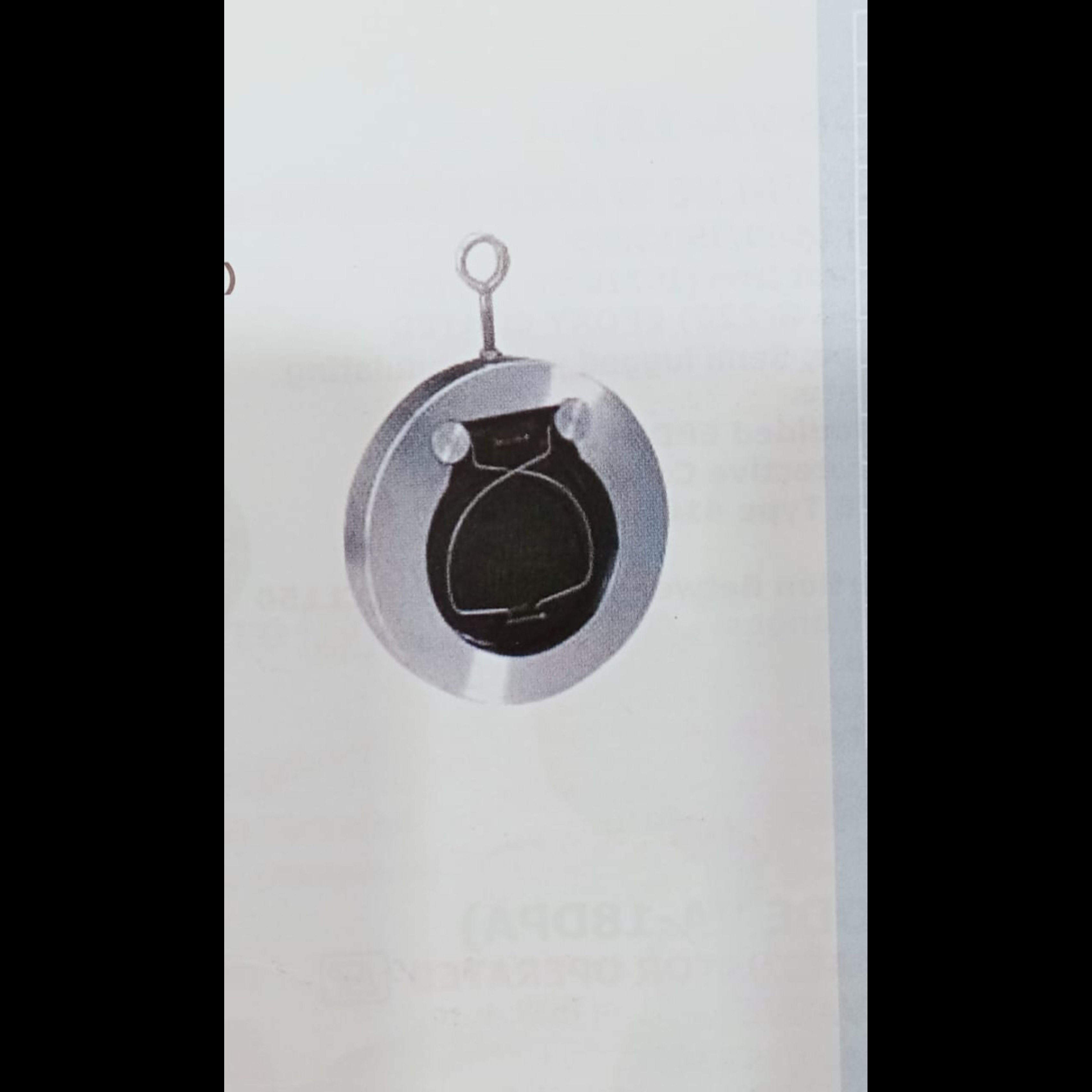
SINGLE PLATE CHECK VALVE
Product Standard – API 6D
Pressure/ Class Rating – PN16
Body Material Cum Standard – Stainless Steel (SS304/ ASTM A351 Gr. CF8)
Product Description – Resilient Seated, Non Slam in Nature Prevent Water Hammarage
Type of Disc – Stainless Steel (ASTM A351 Gr. CF8)
Seat – NBR/EPDM
Spring – AISI 304
End Details – Wafer for Insertion b/w ASME B16.5 #150 BS 10 Table D/E/H / BS 1092 PN10/16
Test Pressure – B.T.P. 24 Bar Hyd.
High S.T.P. 17.6 Bar Hyd.
Low S.T.P. 1 Bar Hyd.
A Single Plate Check Valve is a type of non-return valve designed to allow the flow of fluid in one direction while preventing backflow in the opposite direction. It is widely used in pipelines and industrial applications where maintaining unidirectional flow is crucial. The valve operates automatically without the need for external control, making it simple yet highly effective in ensuring system efficiency and safety.
The main feature of a single plate check valve is its compact design. It consists of a single disc or plate, which swings or tilts on a hinge or shaft inside the valve body. When fluid flows in the forward direction, the pressure lifts the plate to allow smooth passage. However, when the flow reverses, the plate quickly closes against the seat, preventing reverse flow. This quick response helps protect pumps, compressors, and other equipment from potential damage caused by backflow.
One of the key advantages of single plate check valves is their lightweight and space-saving construction. Compared to traditional swing check valves, they require less installation space, making them ideal for pipelines with limited room. They are also known for their low-pressure drop, which enhances system efficiency by minimizing energy losses during operation.
These valves are available in a variety of materials such as cast iron, carbon steel, stainless steel, and alloys to suit different applications and fluid types. They can handle a wide range of media, including water, steam, oil, gas, and chemicals. Their versatility makes them suitable for industries like water treatment plants, oil and gas, chemical processing, power generation, and HVAC systems.
Maintenance of single plate check valves is relatively simple, as their design has fewer moving parts. This increases reliability and reduces downtime in critical operations. Additionally, many models are designed for wafer-type installation, which allows them to be easily mounted between flanges, further simplifying installation and reducing costs.
In conclusion, the Single Plate Check Valve is a practical and efficient solution for preventing reverse flow in pipelines. Its compact size, reliable performance, and ability to handle various fluids make it a preferred choice across multiple industries where system protection and efficiency are essential.